Getting gold out of them thar’ hills is a little more challenging than it was for the first 49ers. America’s first gold strikes were primarily “placer gold”, literally gold left lying in stream beds after being washed down off mountainsides and other surface deposits. It was easy to spot, and easy to pick up.
Panning
The first prospectors cleaned up pretty good, with nothing more complicated than a pan. Back then, they were pretty simple, metal 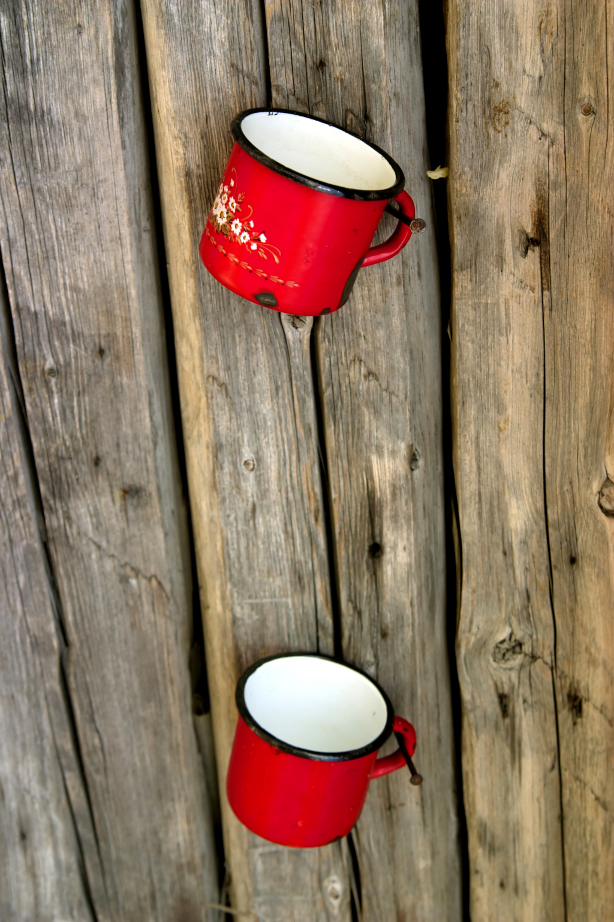 pans. Today they can get high tech, but not necessarily any better. Most pans have relatively high sides, with a base smaller than their top, and with “riffles” or grooves in the high sides which help to keep bits of gold from being dragged out with water and lighter materials. When filled halfway with promising dirt from a stream bed, it can be swirled gently in a circular motion, under the surface of calm water. It’s easier to see the lighter material being lifted and washed away than if you are in a faster moving current. Once it is half empty, you can lift it above the water, and swirl it while gently tilted to one side, so that the riffles deter the heavier gold particles from moving up the sides with the dirt and bits of other materials. It takes some practice, but is great fun for the whole family, and takes very little expenditure on equipment. All you need is a pan, small containers for anything found, tweezers and a suction device for picking gold flakes out of the water in your pan.
Crevicing
Don’t forget the weight of gold! While it was washing down a mountainside or riverbank, it didn’t all make its way to the bottom. Gold can still be found in the fissures of rock formations. And even in the mosses that grow on top. Recovery of crevice gold is relatively easy, requiring only a few tools such as a chisel, rock pick, gold claw, a tablespoon and for the techie, a portable vacuum that fits in your back pack. You’ll also need a classifier, a type of “sieve” that fits over top of your bucket, and keeps larger rocks on top, while allowing dirt, flakes and crystals to drop down below. Remember when seaching rock cracks, to choose the ones that run towards a river, and not along it. These are the ones likely to have caught the most gold runoff.
Dowsing
Is an art that goes back thousands of years, but with many other uses including locating tumours, water, and lost items. It came to be part of gold-finding lore in the usual way. Someone took perhaps a forked stick, held it in front of them, and walked over a field, whereby the stick took a nosedive, and they found Granma’s lost wedding ring. Whether it has any valuable gold finding properties or not, it is still a popular method for seeking out hidden deposits. The dowsing tool can be the aforementioned forked stick, often of a fruit tree, or it can be two L shaped rods of various materials, sometimes enhanced by adding that which you are looking for, in this case- gold. Modern scoffers of the technique, blame its “success” on ideomotor responses. This basically boils down to mind over matter, with the mind of the dowser having subconsciously assayed the area for the most likely features to promise success, and being determined to find something, influencing the action of the rods. But it doesn’t, of course, have any explanation for the spectacular record some people have for finding things, particularly water. Naysayers to dowsing maintain that the only real profiteers from the practice, are the manufacturers of high tech L rods and other devining devices. They assert that:
- if it were a reliable method of locating gold, major companies would be snapping up these tools and advancing their technology, and
- the people who invented these devices would not be so eager to share them.
Metal Detectors
These would be super devices if they detected only gold, but they don’t. They’ll buzz for most conductive or magnetic materials. Beach sand, wet salt flats, and even a human hand can cause interference because of the conductivity of the salt they contain. Many models of detectors have “discrimination” controls that allow you to filter out such things as iron deposits or items. The unfortunate side of this, is that iron has the same low conductivity as small nuggets of gold, which may get filtered out or rejected by the detector as “trash”. Successful metal detecting for gold, depends in large part, on understanding how the detector works, and using it in optimal conditions or circumstances. You’re not going to find deep veins of gold with a metal detector. Settle for small nuggets and flakes in areas close to the surface.
If you think you’ve found a “strike” on land managed by the U.S. Forest Service or the Bureau of Land Management, you make stake a claim to the mineral rights. Mining claims are generally 20 acres in size, and are granted in national forests for the development of natural resources. You can camp or live on your claim, as long as it is kept clean.
There are no claims that can be filed on moving water, such as streams. However some states may charge annual dredging fees if you are operating that kind of equipment. Claims basically relate to the mining of minerals on a section of land, although if a stream runs through yours, you might choose to exchange dredging rights with another prospector for a percentage of the find. Most dredging is done in mountain streams in summer months.
Comments 2
Hello!
Posted 07 May 2011 at 7:29 am ¶I would like to know some opinions about metal detection at a distance, using the L rodblank. We know that if we are looking for a particular metal, it will be to place a controlroom that metal, but this is not 100% accurate! You must also use a gem or crystal thatmake the vibrational connection! So what gemstone or crystal would be best to usevoucher with blank?
Best regards,
Catalin
This is purely a guess, I know little about this, but it comes to mind that when a glass-blower makes genuine ‘red’ glass, they must infuse gold into it while hot and forming. It’s interesting that gold makes glass red. Perhaps red is the answer, or red gems.
Then again, if an ‘interference’ factor is what finds gold, such as interfering electrical circuit, perhaps a gem with the color that is opposite on the color wheel, and the opposite of red, is green, in other words they gray each other when used in painting or art. Purple would be the opposite of gold (yellow), sort of, as when painting gold, it’s not pure yellow, it’s more wheat or bamboo–sometimes a little orange. Well, blue is the opposite of orange. I guess experimentation might help. I wouldn’t know why, but the chemicals and minerals that make the colors in gems, all have ‘vibrations’ of their own, just as music or emotion has vibrations.
The mood of gold is literal to human beings, and it comforts them for some genuinely physiological reason. There are certain circumstances is which gold actually appears red to the naked eye but I can’t remember where I read that (this year, online). It may seem unrelated, though there are books that talk about the power of thought having the power to guide and connect us to what we specifically seek. Since all things in nature tend to be interconnected through vibration, perhaps matching the vibration of gold with the vibration of certain gems may be your answer. You could look up a diagram of the vibrations each emits just as there are diagrams of music tone vibrations. This is the technology on which electronic keyboards with many instruments is based.
Some of this may seem hokey, but when you read certain books such as The Secret, there are experiments recounted where a thought action (which emits vibration–you feel this in near-by body language all the time) affected another person at a far distance miles away, essentially proposing the possibility that distance is irrelevant when it comes to our thoughts. Our thoughts and actions have an effect no matter the distance, is what seems to be the case according to certain findings, including an experiment Einstein did.
Who knows therefore what a ‘true’ metal detector is–perhaps it requires more than an ‘interference’ stick, branch or machine. I don’t underestimate the universe by any means.
Gemstones, I don’t believe, should be abused in any manner, but instead, like food (which also has vibrations), should be used for the good and benefit of all, and contribute to balance in life. I figure that all the earth holds has a purpose we don’t well understand, and many minerals are in our food and bodies, so why underestimate their affect on us in any form, including life and mood preservation.
What we are drawn to may be because our health needs it..we just need to tune in enough to recognize what tools we need to reach our needs.
Asking God for a little guidance is not beyond me because I see Him as part of this big picture of why I’m inclined to want to be near certain earth elements for a sense of well-being. I think He understands that and will help. When I ‘admit to possibility’, I get further and I find more treasure, literally. I think He’ll bless health in any form as long as we don’t abuse what we’ve been given.
No doubt, there is something powerful associated with color, and connecting with gold, in my mind, wouldn’t be excluded from this scenario. As an artist, passion is a vibration I feel coming from color, otherwise without it, me and the whole universe might be bored with everything gray.
A mental detector has to work via vibration, as light and electricity are vibration–and light is comprised of a color spectrum, but perhaps we can surpass the traditional man-made detector with the above added ‘tools’.
The Secret, or The Law of Success by Napolean Hill (1926 version) spoke of the powers we possess naturally that we often underestimate. It doesn’t discuss color, but it does discuss thoughts, expression and action–all vibration-related; and everyone knows certain colored business suits and ties bring on more success and connections, that’s on record. They also know not to dress a hiper-active child in red. Red, especially orange-based red, is known as a highly-charged “connection/attraction” color. It has great ‘pull’ with appetite, fulfillment, joy and physical strength and movement. One study done on Olympic teams wearing blue vs red noted that the red team won far more often.
Funny that gold is seen as red under certain circumstances and that purple is golds (being yellow) opposing color on the color wheel..known for affluence and royalty, which being comforting and peaceful. Perhaps we just need to wear red and “be” detectors, ha!
Posted 19 Dec 2011 at 8:02 pm 